

The Question That Won’t Go Away
Suffering in a world called “God’s creation” — an honest walk through faith, doubt, and wisdom.
There is a question that has haunted humanity since we first learned to think:
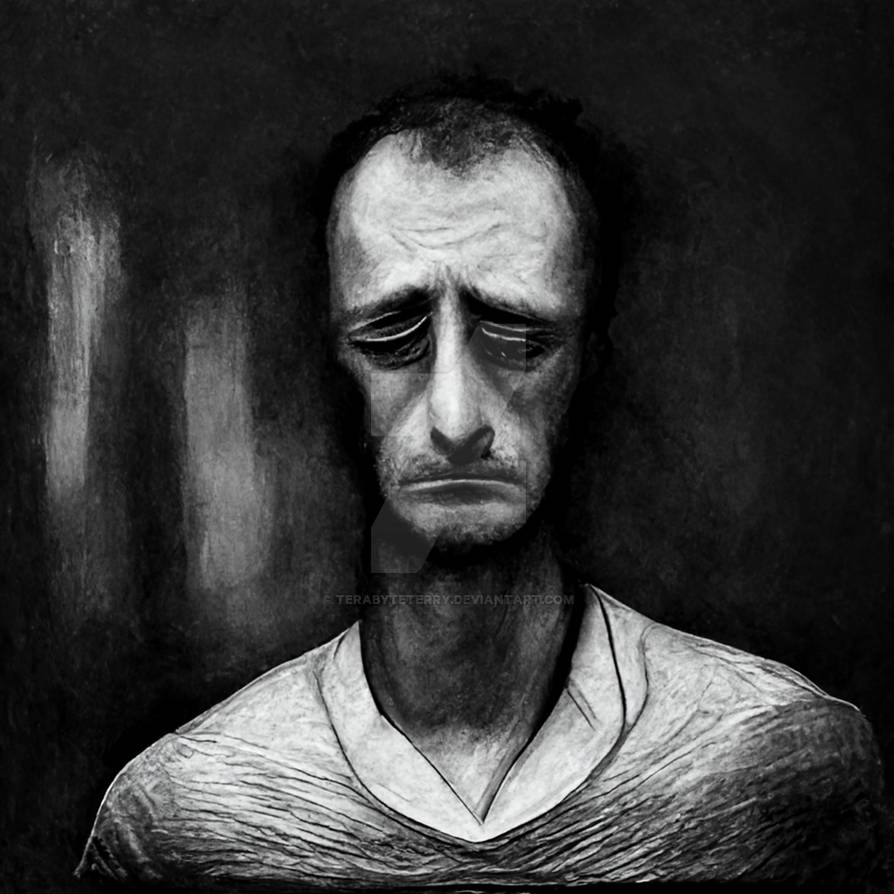
If God is pure, merciful, and loving — why is there so much pain?
Why do children suffer? Why do the innocent cry? Why does disease feast on bodies that have done no wrong?
This isn’t asked out of rebellion. It’s asked out of honest bewilderment. And sometimes, the more we look, the more we wonder whether what we’ve been told about God is truth — or propaganda carefully seeded through history by those who benefited from our obedience.
Different traditions give different answers. Let’s walk through them — gently, thoughtfully, with an open heart and a questioning mind.
The Western story: original sin
In the garden, two people ate a fruit they were told not to eat.
And for that — all of humanity, billions upon billions of souls, were cursed to suffer.
Wait. Let’s sit with that.
If God knows everything, He knew they would eat it. So why put the tree there at all? Why not place it on Mars, or in another galaxy, far from curious hands?
If He knew what would happen, and set the stage anyway… then where is free will? Where is love?
And if it was all part of a plan — a plan that includes cancer, war, abuse, and the tears of children — then doesn’t that blur the line between God and something far darker?
Some say suffering is a path to God. If that’s true — then can we accept a child’s cancer as a road to heaven? Can we call war a divine classroom?
The Eastern story: karma
In the East, suffering is explained differently. It’s not punishment from a judge in the sky — it’s the natural result of actions, like a seed growing into a tree.
Karma is divided into three:
This gives some reason for suffering. It feels logical: you reap what you sow.
But questions remain.
- If someone suffers because of past-life actions they cannot remember — does that mean we should simply accept their suffering?
- If a person commits a crime, should we do nothing, waiting for karma to catch them in the next life?
Hinduism’s vast wisdom — and its distortions
Hinduism contains more sacred texts, more truth, more knowledge than perhaps any other civilization. But over thousands of years, rulers and dominant groups influenced some of these texts. They added. They edited. They shaped.
Not all of what we read today is original.
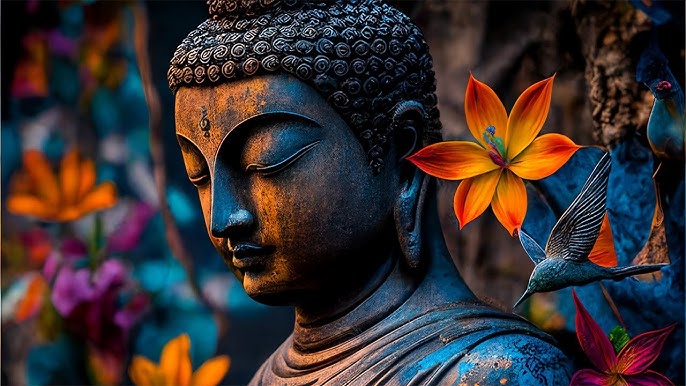
And then came Buddha — believed by some to be an incarnation of Vishnu himself — who saw the distortions and came to separate truth from propaganda.
The Buddha’s diagnosis: four simple truths
The Buddha didn’t start with God. He started with suffering — because suffering is what we all share.
The Truth of Suffering (Dukkha)
Life has suffering — sickness, sadness, even the struggle to get what you want. No one escapes it.
The Truth of the Cause (Samudaya)
Suffering comes from wanting too much (cravings) or being attached to things that don’t last.
The Truth of the End (Nirodha)
There’s a way to stop suffering. Let go of cravings and attachments, and you can find peace.
The Truth of the Path (Magga)
Follow the Noble Eightfold Path — a guide to living wisely, kindly, and mindfully.
The Noble Eightfold Path:
— dhammacakkappavattana sutta
Then by following the eightfold path, the individual can reduce suffering in this world and eventually reach an enlightenment that is transcendent of suffering.
Teaching of Buddha on impermanent nature
Just as a snake sheds its worn-out skin, so we must shed our old suffering. — Dhammapada
- Karma and its fruit: Good or bad, actions lead to corresponding results, and those results can manifest as suffering, including illness. The Buddha does not always attribute disease directly to past-life karma — he acknowledges that harmful actions in this life — violence, greed, neglecting one’s health — can lead to illness.
- Natural consequence of impermanence (anicca): Everything, including the body, is subject to change and decay. Disease is part of this natural manifestation.
- Disease as a chance for enlightenment: In Buddhism, illness is neither punishment nor reward — simply an opportunity for growth, new insight, and feeling others’ pain.
- Mindfulness and mental calmness: When suffering from illness, Buddhists use mindfulness (sati), patience (khanti), and equanimity (upekkha) to transform suffering into wisdom.
The Buddha emphasized universal well-being and compassion. He encouraged caring for the sick, and traditional Buddhist communities developed herbal medicine over centuries.
“The sick should be treated with respect. One should think: ‘Here is a fellow human being, suffering from illness and disease. May I provide care for them to ease their suffering.’” — Vinaya Pitaka
He encouraged healing by medicine or any novel method — in contrast to some beliefs that reject medicine and embrace suffering as a path to God.
The Buddha’s opinion about gods
Buddhism is not about knowing the nature of God. Deities or devas are included in the cycle of samsara and subject to karma and impermanence.
The Buddha taught that human beings can be liberated through self-effort, ethical conduct, mindfulness, and wisdom — rather than relying on any gods.
Conclusion
Disease and suffering are part of the worldly, impermanent life under Buddhism.
This implies that disease is not a divine punishment but a result of impermanence, karma, and the inherent suffering of life (dukkha).
By practicing mindfulness, following the Noble Eightfold Path, and embracing compassion, Buddhists can transform their experience of suffering — including illness — into a stepping stone toward enlightenment.
And so the question remains — not to divide us, but to deepen our search for truth, together.
These are ancient questions, asked anew. No tradition has the final word — only voices in an eternal conversation.
Leave a Reply