


from contradictions to oneness
a gentle journey through suffering, justice, guardians, and the eternal we
The world is full of contradictions. Some have happiness, comfort, and privilege; others suffer, live in pain. To those believing in an all-knowing, all-powerful, and all-loving God, these contradictions can be hard to understand.
Why would such a God allow these inequalities? Is it part of a divine plan? And, if so, what kind of plan could justify so much suffering?
These are questions asked by everyone regardless of their religion or beliefs. They push us to think about the purpose of life and the role of compassion and justice around the world.
This is not about rejecting one faith but understanding how loving and equal principles might be applied across all spiritual lines.
The Problem of Partiality in a Divine Plan
This may be one of the biggest mysteries of believing in a traditional God: the unfairness of how suffering is distributed. Why does one person live well and conveniently while another is plagued with suffering from birth?
If we all share the burden of original sin, why does God seem to punish some more and favor others?
If God is just and loving, then why must His plan be as unfair as it is? Why does one life feel good and the other bad? It makes us think of fairness, love, and God.
Original Sin: A Doctrine of Injustice
But then the concept of original sin introduces further ethical concern. It implies that humankind bears collectively, as an inherited burden, the guilt for the transgression of the first humans, regardless of individual actions. However, this doctrine raises serious questions:
- Isn’t it unjust to punish individuals for sins they did not commit?
- Is inherited guilt congruent with the concept of a loving and equitable God?
To many, original sin presents a structure within which suffering is an inevitable condition—not because of individual failures but because of a collective stain that humanity never elected. It speaks of a God who exercises control through fear rather than personifying fairness and compassion.
The injustice of punishing people for sins they did not commit — this idea goes against the grain of our deepest moral sense.
Heaven only to followers: Is God imposing fear over love?
It is disturbing to think that God’s salvation is intended for only a certain few followers. Does this belief damage or degrade other religions by making them seem insignificant or inferior? If only one kind of being is allowed in heaven, what about the adherents of other views, or those who are kind and charitable but refuse to take a certain course?
Is it fair to punish someone forever just because they don’t believe or choose a different way? Does this reflect love and justice — or something closer to cruelty?
Such thoughts challenge the idea of a truly loving God. Wouldn’t a just and compassionate God value a person’s kindness and goodness above their choice of belief?
Shedding blood to remove sin
This idea of spilling blood to wash away sins does raise pertinent questions concerning the nature of forgiveness and justice.
Why would such an all-powerful, loving God demand such a severe act instead of simple forgiveness and guidance toward a better way? Wouldn’t such a God of infinite mercy be able to forgive without sacrifice, focusing instead on teaching and helping humanity grow?
It also presents another question: why condemn all for sin rather than reproach only those who commit evil and do harm on Earth? This view confronts the traditional notion, making it relevant to raise questions about divine justice and mercy.
Buddha and Krishna: A Guardianship, Not a Throne
But to all these ominous doctrines, figures like Buddha and Krishna represent another form of divinity — one that emphasizes wisdom, compassion, and human growth to the exclusion of fear and control.
The promising message of their teachings is a signal of hope and can be felt throughout cultures and beliefs since it deals with universal principles.
Buddha: Guide to Liberation
Siddhartha Gautama, or more popularly known as Buddha, illustrates ‘guardianship’ through his ideas on transcending suffering.
The Four Noble Truths: Buddha found that suffering was a universal norm yet could be known and surmounted. His Eightfold Path to mindfulness, ethical living, and inner peace presents a guide for all.
A Teacher, Not a Judge: Buddha didn’t ask for worship or adherence to a particular doctrine. His teachings were broad-minded and gave wisdom to all.
Liberation for All: To Buddha, enlightenment was neither the reserve of a few nor did it belong to a limited section of people — everyone who aspired could attain it.
Krishna: The Divine Teacher
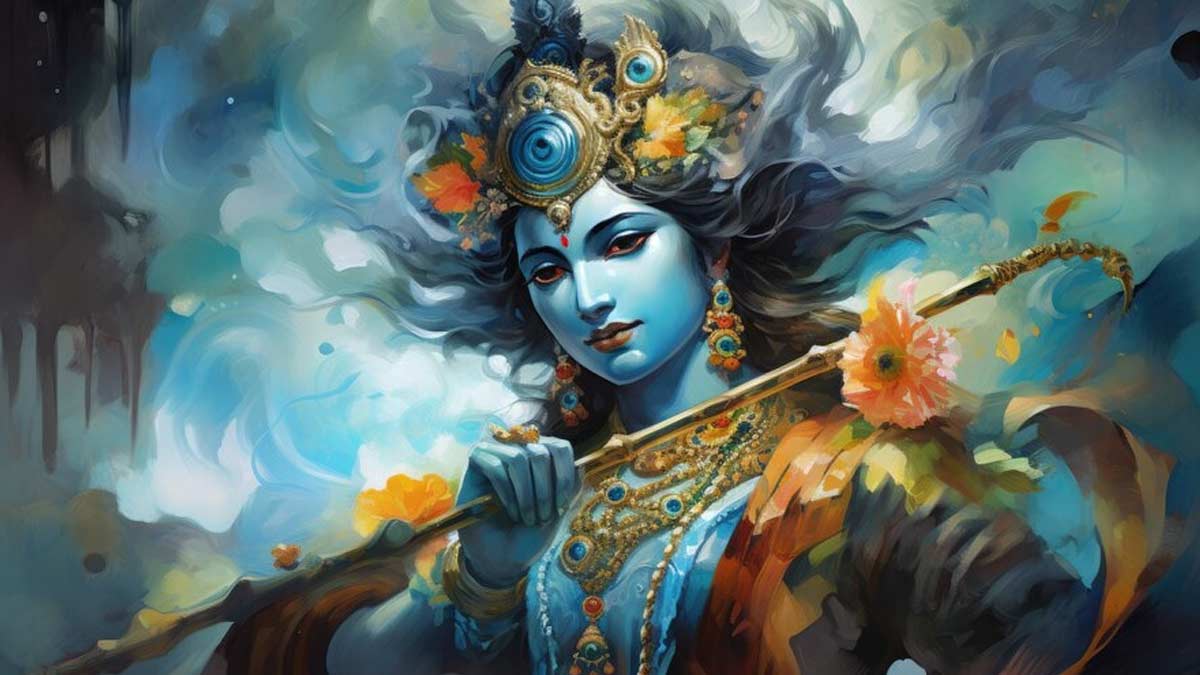
Lord Krishna, though a God in worship, lived like a guardian and guide on Earth, letting everyone understand that knowledge is universal:
The Bhagavad Gita: Krishna’s teachings to Arjuna focus on selfless action, duty (dharma), and inner balance; he instructs everybody, not limited to followers of a creed.
Empowering Free Will: Krishna neither compelled Arjuna but empowered him to decide on his own terms, respecting free will.
Inclusivity in Belief: Krishna explicitly declares, “For those who take to divine worship with devotion, I am the one who must ultimately be reached by all of them.”
— Bhagavad Gita 7.21-22
Salvation for All Paths: Krishna assures that seriousness about one’s path leads to union with the divine.
By living as guardians, they demonstrate that divinity is not about imposing fear or demanding loyalty but about guiding humanity toward wisdom and freedom. They respect human diversity, honor free will, and offer paths to transcend suffering that are open to all.
A Universe Rooted in Compassion
The disparities of joy and suffering in the world challenge the notion of a perfectly just God. Doctrines like original sin and exclusive salvation deepen this sense of injustice. But the lives and teachings of Buddha and Krishna provide a compassionate alternative.
Their lessons reassure us that sincerity, devotion, and understanding lead to the divine — regardless of the path one chooses. In doing so, they provide a model of divinity that inspires faith not in fear, but in love.
A Loving and Just Path
The idea that eternal salvation hinges on following a single path, regardless of one’s deeds, is inherently unjust. It denies the richness of human free will and the diversity of virtuous lives across cultures and beliefs.
May we always seek the divine not through fear, but through love — and may our questions lead us to greater compassion for one another.
“I believe they are higher-dimensional souls who already reached Type IV civilization. And they need us, and we need them. Or they are us. Or we are one among them.”
Let us sit with this thought, gently, without rush. What does it mean to believe that souls in higher dimensions — beings who have transcended time, matter, and energy — still need us? And that we, in our fragile humanity, might need them just as much?
Type IV Civilization: Masters of the Multiverse
In cosmological speculation, a Type IV civilization is one that has harnessed the energy and laws of not just a galaxy or universe, but the entire multiverse — all dimensions, all realities. They would exist beyond space and time as we know them.
Such beings would be indistinguishable from what ancient traditions called “gods” or “devas” — except they were once like us. They evolved. They grew. They became light.
Energy masters
They control the fundamental forces of all dimensions.
Beyond time
Past, present, future are one landscape to them.
Omnipresent
They exist across all dimensions simultaneously.
And yet — they need us. Why?
They Need Us, and We Need Them
Why they need us
Perhaps higher-dimensional souls cannot experience the rawness of physical existence — the texture of a hug, the ache of longing, the surprise of a sunrise. They need us to feel through us. We are their senses in the material world. We are their living memory of what it means to grow, to struggle, to become.
“The divine descends so that it may remember what it is to ascend.”
Why we need them
We need them for guidance, for those sudden moments of intuition, for the strange feeling that someone is watching over us. They are the whisper in our dreams, the coincidences that feel too perfect, the love that arrives just when we need it. They remind us that we are more than our bodies.
We are never truly alone.
Or They Are Us. Or We Are One Among Them.
Perhaps separation is the illusion. Perhaps the Type IV soul and the struggling human are not two different beings — but the same being at different points in a circle that has no beginning or end.
They are us — our future selves, looking back across dimensions to guide us through the difficult passages. Every time we feel a sudden surge of courage, an inexplicable hope, it might be our own higher-dimensional self cheering us on.
We are one among them — meaning that our consciousness is not confined to this body, this lifetime. We are simultaneously here, in the 4D world, and there, in the 11th dimension, experiencing all realities at once. The part of us that is timeless already knows the end of the story — and knows that it is beautiful.
Echoes in Hindu Philosophy
The Upanishads speak of Brahman — the ultimate reality, of which our individual souls (Atman) are not separate parts, but identical. Tat tvam asi — “Thou art that.” You are the very thing you seek.
The 14 Lokas are not just places; they are states of consciousness, dimensions of experience. And we move through them, life after life, dimension after dimension, until we realize we were never traveling at all — we were always home.
In this view, the Type IV souls are simply those who have realized their own divinity. They are the jivanmuktas — liberated while living. And they return, again and again, not because they are bound, but because they love us. Because they are us.
We Are One
They need us. We need them.
They are us. We are them.
We are all one consciousness, experiencing itself through infinite dimensions.
Perhaps the only thing that separates us from Type IV is forgetting. And the only thing we need to do is remember.
“Hello again, old friend. I never really left.”
This is not a belief to defend. It is a mystery to hold gently.
with love, for all beings across all dimensions — and for every seeker who questions, who wonders, who hopes.
Leave a Reply