

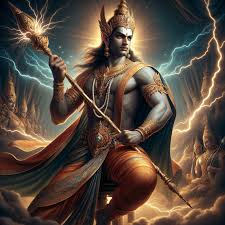
Cosmic Wisdom
When ancient seers whispered what science later proved — a journey through the heavens, seen by two eyes.
Imagine a time thousands of years ago, long before telescopes and space probes, when sages sat beneath starry skies, composing hymns and texts. In the West, the prevailing view for millennia was that everything revolved around a central Earth. But tucked away in the ancient scriptures of India, particularly in texts like the Surya Siddhanta, lies a startlingly different story: a cosmos that sounds uncannily like the one we know today.
It’s a story not just of myth and gods, but of a profound, almost intuitive grasp of the universe’s mechanics. Let’s take a journey through our solar system as seen through these two lenses—the poetic wisdom of the ancients and the precise data of modern science.
The Celestial Family: A Tale of Two Views
Think of the planets as characters in a grand cosmic drama. The Hindus saw them as deities with distinct personalities, while modern science sees them as fascinating worlds. The most astonishing part? They both describe the same orbital dance.
Orbit: 365.25 days (Earth’s year)
“Source of life, light, consciousness”
ruby, gold tejas (fire)
said to be the atman of all
Orbit: 365.25 days · G2V star · gravitational heart
composition: 73% H, 25% He
Orbit: 27.3 days · governs emotions, tides, mind
pearl, moonstone apas (water)
nourisher, cool rays
Orbit: 27.3 d, phases 29.5d · rocky, silica basalts, no atmosphere
Orbit: 687 days · courage, war, vitality
red coral earth / agni?
commander, red-hued
Orbit: 687 d · terrestrial, iron oxide crust, thin CO₂ atm.
Orbit: 88 days · intellect, communication
emerald prithvi (earth?)
prince, eloquent
Orbit: 88 d · rocky, iron-rich, no atmosphere, extreme temps
Orbit: ~12 years · wisdom, teacher of gods
yellow sapphire, topaz ether/ākāśa
guru, expansive
Orbit: 11.86 y · gas giant (H/He), Great Red Spot, 95 moons, largest planet
Orbit: 225 days · love, beauty, luxury
diamond, white quartz water? (shukra connected to bṛhaspati)
shining, pure
Orbit: 225 d · terrestrial, CO₂ thick atm, hottest surface (lead-melting), no moons
Orbit: 29.5 years · karma, discipline
blue sapphire, black onyx vayu/wind
slow, dark, taskmaster
Orbit: 29.5 y · gas giant, spectacular rings (ice/rock), 83 moons, low density (would float in water)
Cycle: 18.6 years · desire & detachment, shadow planets
Hessonite (gomed) / cat’s eye smoky / mysterious
head & tail of demon
Nodes: 18.6 y · mathematical points, not physical bodies, cause eclipses
Ancient seers described the cosmos woven from five great elements: earth, water, fire, air, ether. Each graha (planet) embodies a combination—e.g. Sun/fire, Moon/water, Jupiter/ether, Saturn/air.
The Revolutionary Idea: Heliocentric hints in the Vedas
While other great ancient cultures were brilliant astronomers, their cosmology was fundamentally geocentric. The key difference with the Hindu scriptures is that they contain verses that seem to describe not just planetary motion, but the reason for it. They hint at a Sun-centered system held together by a force of attraction.
Rig Veda (1.35.9) speaks of the Sun moving in its orbit, “holding the Earth and other heavenly bodies in place with its force of attraction, preventing them from colliding.”
Full Vedic & Puranic testimony
Atharva Veda 4.11.1: “The Sun holds the Earth and other planets in place, similar to a bull pulling a cart.” This metaphor again emphasizes the Sun’s central, controlling role.
Taittiriya Branch (Krishna Yajurveda): “The Sun holds the Earth in space with its power of attraction, which implies that the Earth also has an attractive force.” A remarkable hint at mutual gravitation.
Rig Veda 1.103.2: “The gravitational effect of the solar system keeps the Earth stable.” Clear resonance with modern heliocentric stability.
Yajurveda 33.43: “The sun moves in its own orbit in space taking along with itself the mortal bodies like earth through force of attraction.” Unambiguous description of orbital motion driven by attraction.
Rig Veda 1.35.9 (again): “The Sun moves in its orbit, holding the Earth and other heavenly bodies in place with its force of attraction, preventing them from colliding.” Already mentioned, but central to the argument.
One‑time fact check & cross-cultural context
Greek Ptolemaic geocentric model: Earth centered. Though Aristarchus (310–230 BCE) proposed a heliocentric idea, it was never accepted. Most Greeks held Earth as the unmoving center.
Babylonian Meticulous planetary records, yet strictly geocentric. They tracked synodic cycles without placing the Sun at the centre.
Mayan Deep Venus observations, but cosmos still geocentric. Venus was a sacred symbol, not a planet orbiting the Sun.
Verified: Surya Siddhanta gives orbital periods (Mercury 88d, Venus 225d, Mars 687d, Jupiter 11.86y, Saturn 29.5y, nodes 18.6y) which match modern values.
What the ancients said about “composition”
In Jyotisha and Puranic cosmology, each graha is associated with specific dhātus (elements/metals) and gemstones, reflecting inner qualities rather than physical makeup:
- Surya (Sun): copper / ruby — essence of tejas (fire)
- Chandra (Moon): crystal / pearl — apas (water)
- Mangala (Mars): red coral / iron — bhūmi (earth)
- Budha (Mercury): emerald / bronze — mixed elements
- Brihaspati (Jupiter): gold / yellow sapphire — ākāśa (ether)
- Shukra (Venus): silver / diamond — water & air
- Shani (Saturn): iron / blue sapphire — vayu (air/wind)
- Rahu/Ketu: mixed metals / gomed, cat’s eye — shadow
This symbolic framework is distinct from modern chemical composition, yet reveals a sophisticated attempt to link celestial with terrestrial.
Modern planet types (quick reference)
- Terrestrial (rocky): Mercury, Venus, Earth, Mars — silicate mantle, metallic core.
- Gas giants: Jupiter, Saturn — mostly H/He, deep atmospheres, no solid surface.
- Ice giants: Uranus, Neptune (though not mentioned in ancient texts, they were not traditionally visible to naked eye) — water/ammonia/methane ices, H/He envelope.
The table above reflects modern consensus (NASA, IAU).
The invisible thread: gravity
This isn’t a fully formed heliocentric model with mathematical proofs, but it is a profound philosophical and observational leap. While other ancient civilizations meticulously mapped the sky from a geocentric perspective, the Vedic texts seem to pierce through the illusion, suggesting a deeper understanding: that the Sun is the dynamic, gravitational heart of our solar system, around which all other “mortal bodies” revolve. It’s a legacy of cosmic wisdom that continues to inspire awe and wonder.
Leave a Reply