

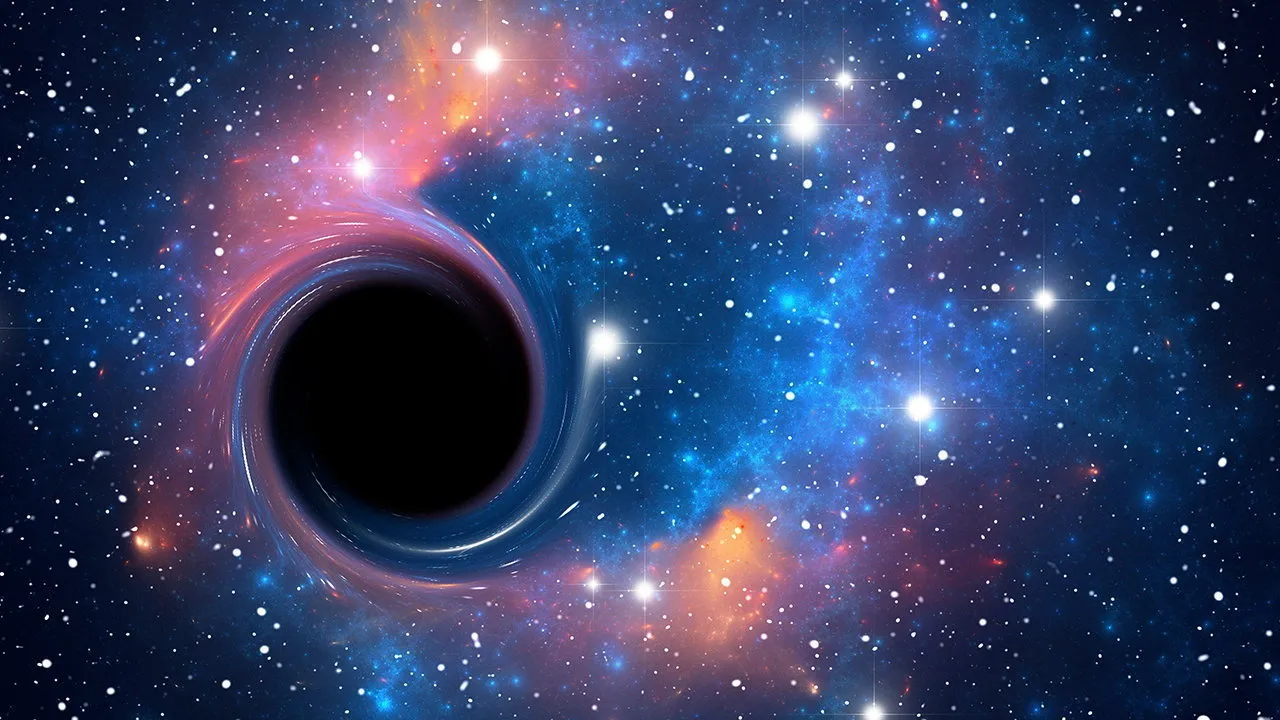

Almost every creation story is based on the idea that the universe came from a total void, or
Almost every creation story is based on the idea that the universe came from a total void
However, this idea is actually a deep philosophical and logical contradiction.
We naturally picture a blank canvas before an artist starts, or silence before the first note. Yet as soon as we try to define “Nothing,” it disappears. In other words, the idea of true non-existence is a trap created by the limits of our language and way of thinking.
If we examine the logic closely, we find something surprising: contrary to intuition, there must always have been something.
The Logical Paradox of “Nothing”
First and foremost, the idea of “nothing” breaks down as soon as you give it any property. Indeed, if you try to describe non-existence, you end up proving that something else exists.
1. The Illusion of Space and Containment
If “Nothing” really means total absence, how would it behave? Many people picture a Creator putting the universe into nothingness. But if we can put even a single atom or a vacuum into it, then “Nothing” must have shape and size. More precisely, it has room to hold things. Consequently, even empty space is not nothing; it’s a container.
2. The Paradox of Resistance (The Cosmic Soup)
What if nothingness is so complete that it pushes back against anything trying to enter it? If “Nothing” can keep out even a single atom, or even stop a space from forming where something could go, does that make it a barrier? If so, it must have some kind of property, like density, friction, force, or the power to exclude. However, a barrier of that kind is no longer nothing. Therefore, as soon as “Nothing” can block, resist, exclude, or contain anything, it is no longer true nothingness. Instead, it becomes a hidden kind of existence. It is something. And furthermore, it is not just something thin or abstract. On the contrary, it would be more like a cosmic soup—a hidden background of existence stretching everywhere, real enough to need no origin and no end.
3. The Temporal Fallacy
People often say, “Before the universe, there was nothing.” Yet this statement doesn’t make sense logically. After all, the word “before” only makes sense if time exists. Conversely, if there is truly “nothing,” then time can’t exist either. As a result, you can’t measure a period with no events. Moreover, as soon as you talk about how long the void lasted—even if you say it lasted forever—you’re giving it a property of time. If time were there, then “Nothing” wasn’t. In essence, the state of absolute nothingness—lacking space, time, resistance, and energy—cannot logically exist. The moment we try to conceptualise it, we give it form, thereby validating existence.
True, nothing can’t be empty space, because empty space is still something. Similarly, it cannot be a barrier, because a barrier is something. Likewise, it cannot be a waiting state, because that already assumes time. So the idea of “absolute nothing” slips away the moment we try to describe it.
The Quantum Truth: The Eternal Hum
If the universe didn’t come from nothing, then there must have always been some basic state of Something. In fact, modern cosmology, quantum physics, and many philosophies now suggest that existence is an endless, vibrating field.
We are the Quantum Flux
The universe isn’t made of lifeless particles in empty space. Rather, it’s made of energy and information—a huge, shifting Quantum Field. Hence, what we see as matter is just a vibration or a ripple in this field.
The Eternal Field
This field never started; it has always existed as the foundation of reality. Moreover, it has always been vibrating, shaping its patterns into gases, stars, planets, and eventually, consciousness. Thus, what people call the Creator or God is really just this basic, eternal hum of reality that can’t be switched off or created.
The Grand Illusion of Separation
This idea breaks down the wall between the Observer and the Observed. If we accept that existence is eternal and that we are just patterns of the same vibrating energy, we see the main illusion in human experience: the illusion of separation.
We are not creations separate from the source. On the contrary, we are the source itself. In short, we are the universe—the endless, eternal field of energy—that has formed a conscious pattern able to ask, “Where did I come from?”
The universe didn’t come from nothing. Instead, it came from a timeless, vibrating All, and you are a living expression of that All.
What do you think?
Is the idea of “Nothing” just a limit of our language? Or is there a problem with the logic of eternity? Share your thoughts in the comments below!
— Bootstrap · rich transitions for better flow
Leave a Reply